DRAFT

This is Bob Frankston's web site. Bob Frankston

Bob Frankston (bio)

Welcome to my writings.

If you want the recent essays check out the sidebar on the left or, better, go to Further Readings for a curated list of essays.

Other essays are listed in chronological order and then by category. The main essays are in larger letters and minor documents (such as messages posted on discussion sites) are indented and in smaller letters. The documents themselves are located on this site (www.Frankston.com) and as well as external sites.

Note that I'm currently writing shorter transient posts on Facebook as "Bob Frankston". I'm gathering links here.

You can send me Email. Note this unique address is only valid for the next few days.

The best way to link to a document is as http://rmf.vc/keyword.

By default only the most recent posts are shown, to see:
Recent By Date Posts from the last few months
Columns Columns written in 1998-1999 -- blogging before blogs. Look here for my more recent columns.
All All posts -- hundreds

Writings and Updates by Date

Some of the recent entries are also listed on the sidebar. Secondary items such as postings on other mailing lists are indented. Note that the year shown is the year the essay was updated. An essay written in 1979 might be listed under 2009 if it was updated recently.
CES 2012: In Perspective 📄 07‑Feb‑2012 25‑Aug‑2025
Observations from the Consumer Electronics Show. While I do describe some of the products this is more a view of the ongoing changes in consumer electronics and more.
Wrist-based programmable devices (AKA watches) and other devices give us a reason to rethink the design point of the Internet.
Information versus Telecom 📄 05‑May‑2011 26‑Dec‑2012
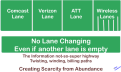
If you think that the Internet is important because it's a network you're missing the point. Today's telecommunications industry exists in defiance of all we've learned about "information" in the last 100 years. In 1897 the British Copyright office warned us about the danger of creating scarcity by taking our abundance and converting it to private property. In 1949 Claude Shannon gave us a science of "Information" that helped us understand the distinction between bits and what we do with them. The generativity of today's Internet demonstrates the power of the idea. We need to build on this understanding and experience to create an infrastructure that supports the exchange of bits. We can then focus on relationships and creating value rather than getting lost in the constricted pipes of today's Telecom.
USB Rubber Ducky Online Payload Generator 18‑Dec‑2012 18‑Dec‑2012
A worrisome attack vector via low level device interfaces.
One day a Gigabit may matter but today such connections are simply PR fodder deverting our attention from demanding availability.
3D in Perspective – First Thoughts 📄 23‑May‑2010 25‑Nov‑2012
I'm excited about the possibilities for stereoscopic (3D) viewing but we need to step back to understand the possibilities. It may be far more about your family photo album than big budget movies.
Re ITU gone wild 21‑Nov‑2012 21‑Nov‑2012
We need to remember that the problem with the ITU is not the details of their proposals but in the fact that telecommunications is a very different paradigm from the Internet.
A post about choices in connectivity based on a Kushnick proposal
I wrote this for an
The Risks of Telecom 21‑Oct‑2012
The recent New Yorker story about an accident on the Chinese railroad mentioned a passenger upload a picture to the web while the train's engineer couldn't communciate because he had to use a traditional communications system.
A light hearted piece on the ESCape key in the NYT Magazine.
We talk about how to make connectivity more available to communities.
Too bad the DNS assures the Internet will unravel.
If we are to understand why Apple wants to own their maps and why telecommunications companies are what they are we need to look at how the various markets work.
My local T-Mobile store had knowledge staff -- that's why I know and use T-Mobile. Now they are devolving into simply a second tier carrier. Their ads don't do much to tell me what is different (actually selling phones instead of just leasing).
The Signal has Left the Network 📹 07‑Sep‑2012 08‑Sep‑2012
The power of the Internet comes from radical simplicity as I explain this talk I gave to the IEEE Communications Society.
Owning blue? 14‑Aug‑2012
Frank posted some of my comments about the business of owning colors.
Webinar to preview my GlobeCom 2012 presentations.
Grand Debate:The Internet vs. Telecom 08‑Aug‑2012 08‑Aug‑2012
Announcement for the preview for the GlobeCom event.
The PSTN vs. the Internet 06‑Aug‑2012 06‑Aug‑2012
The PSTN and Internet are different ways to use the same resources. We should look the post-PSTN era as an opportunity rather than a threat.
How do we build persistent devices when we are dependent upon the whim of a path provider?
We're starting to see devices that take advantage of connectivity with the whom. It's a reminder that the Internet isn't just about the web and a reminder of how much further we have to go.
If we are to best support the needs of society and the economy we need to first ask the right questions.
re Who Really Invented the Internet? -WSJ 23‑Jul‑2012 23‑Jul‑2012
The problem with this attempt to make up a political myth is not just that it gets it wrong but it confuses an idea with an implementation.
Re Making the Most of the Wireless Spectrum 20‑Jul‑2012 20‑Jul‑2012
The governments PCAST's embrace of "spectrum sharing" misses the point of the Internet.
Thinking outside the pipe 📄 17‑Oct‑2011 19‑Jul‑2012
The idea that bits must flow through wires or virtual pipes makes it hard to think of the Internet as infrastructure like roads. We communicate by exchanging bits. We need to move beyond the pipe or railroad metaphors if we are to take advantage of the abundant opportunities all around us.
The light bulb as an end point. 📄 22‑Jun‑2012 22‑Jun‑2012
You can buy LED bulbs that be act as network end points in themselves rather than depending on the light fixture.
The question shouldn't be how to govern the Internet, it should be what does it mean to govern our very ability to communicate.
Verizon's 300Mbps FiOS vs LTE 03‑Jun‑2012 03‑Jun‑2012
What if Verizon add a Wi-Fi/LTE access point at each FiOS drop -- we'd have essentially unlimited capacity without "consuming" spectrum. It's such a powerful solution we have to wonder why they prefer scarcity.
As each service provider redoubles its effort to lock users into their world we get the kind of lock-ins we associate with monopolies.
Measuring capacity in channels misses the point of the Internet in decoupling meaning from bits.
Little has changed since this 1961 ATT promotional video -- as ATT continues try to take credit for value created outside of their network.
It isn't rational to invest in today's telecom industry. It is rational to invest in infrastructure. Today's problems with attracting capital are simply symptoms that we should heed rather than redoubling our effort to live in the past.
OpenFlow and OpenRadio seem like throwbacks to the days of circuits.
The Information not-so-super Highway 📄 07‑Feb‑2011 19‑Apr‑2012
New watch. WIMM ONE 11‑Apr‑2012 11‑Apr‑2012
Dave Farber tries the WIMM watch.
In substituting an XBox for a set top box Comcast is moving their core functions outside their network. Same for Verizon/FiOS and others.
From DIY to the Internet 📄 11‑Mar‑2012 14‑Mar‑2012
The Internet has become a phenomenon because if empowers us. To understand how to get "more Internet" we must recognize that we got the Internet by doing things ourselves (DIY) and if we want more connectivity we need to start locally rather than petitioning the telecommunications providers. The Internet is not a layer on top of telecommunications but an entirely different concept.
My presentation at the ISOC DC March 1st 2012 meeting on Connecting Everyone.
The Slides Corresponding to the ISOC DC talk
Again Verizon is attempting to recycle old products to new markets. Why should Verizon make more money than Netflix just for deigning to let a few bits reach customers?
A well-written piece by Nick Bolton on the dangers of managed innovation.
TV anywhere is caught in the web woven to keep content under control.
"Mobile" has already gone "Wi-Fi". Are the carriers trying to lockdown Wi-Fi so they can sell it back to us? WTF! But then, what's now -- they have nothing to sell that we don't already have.
The story about overcharging GI's in transit is framed as if nothing has changed in telecommunications other than a small change in the cost of phone calls.
Comcast's caps go against the trend to move all content over IP
The Internet's importance comes by providing opportunity for individuals and groups to create new value without being dependent upon service providers.
We should applaud the transformation changes that came from work done at Bell Labs. When we do so we must make sure we take away the right lessons rather than expecting innovation magic.
Trying to reconcile VoIP with traditional telecommunications may be a noble effort but we need to face up to the fundamtel difference in the concepts.
The founder of Broadcom gave an interesting talk on this history of the hardware used in networks. While the chips are important I'm a software guy as see them in the context of applications and larger market forces.
It’s about Capacity not Speed 📄 30‑Jan‑2012 01‑Feb‑2012
Electrons all go at the same speed so we do we talk about speed when it's really about capacity?
re BT plan puts 300Mbps in apartment blocks 30‑Jan‑2012 30‑Jan‑2012
300Mbps per apartment sounds great until you think about it.
Jobs, Jobs and Cars ... and Speech 27‑Jan‑2012 27‑Jan‑2012
"Creating" jobs requires creating a supportive environment. Part of this is the ability to communicate. The US First Amendment creates an atmosphere the encourages experimentation. We also need the ability to exchange bits and today's idea of making speech a profit center does great harm to our ability to do business.
Hotspot 2.0 and or X.400 Redux 12‑Jan‑2012 12‑Jan‑2012
Another attempt by the incumbent carriers to try to hold back connectivity.
Politics makes for strange bedfellows because seeming agreements often mask radically different understandings beyond the agreement. This is why "friends of the Internet" can support bad ideas like SOPA and DRM.
Once again we see the false meme that the Internet it something we can use up. In this case it's compounded by hijacking the 1% meme. More disturbing when the NY Times gives such false ideas credibility.
It's hard to see past discontinuities and thus we tend to fear them. Thus we tend to deny ourselves the benefits despite examples like the Internet and general purpose computing.
Too many institutions are focused on avoiding risks. How do we adopt a balanced approach to risk?
We continue to force the Internet into the mold of telecom rather than recognizing it is something completely different.

Columns

The columns were my first attempt at writing short opinion pieces. They were written in 1998 and 1999. The proofreading was far limited at best.

Bob Frankston
Copyright 1997-2024